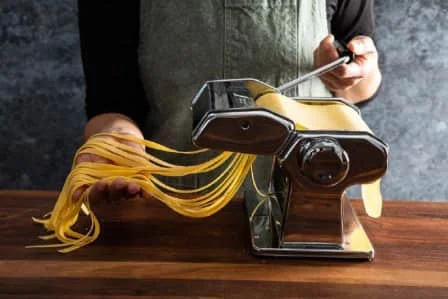
How to Use a Pasta Machine: Rolling, Cutting, and Shaping Dough
A pasta machine turns a ball of rested dough into even sheets and neatly cut noodles, but good results depend on more than turning the handle. The dough must have the right texture, the rollers need gradual adjustment, and each sheet should be handled according to its moisture level. This guide explains how to use manual pasta machines confidently, from the first pass through the rollers to cooking, storing, and cleaning the finished pasta.
Prepare and Rest Pasta Dough Before Rolling
Start with a dough that is firm, smooth, and only slightly tacky. A basic batch can be made with flour and eggs, or with flour and water for an eggless dough. The exact ratio varies with flour type, egg size, humidity, and the intended pasta shape, so add liquid gradually rather than correcting a wet dough with a large amount of flour later.
Knead the dough until its surface becomes reasonably smooth and elastic. If it feels sticky, knead in a little flour; if it cracks immediately when pressed, let it rest before adding more liquid. Wrap the dough or place it in a covered container and rest it for at least 30 minutes at room temperature. Resting allows the flour to hydrate and relaxes the gluten, making the dough less likely to spring back while rolling.
Divide the rested dough into manageable pieces, usually two to four portions depending on the machine and work surface. Keep unused portions covered so they do not form a dry skin. Flatten one portion into a rough rectangle that is narrow enough to enter the rollers without folding awkwardly. Dust the dough and rollers lightly when necessary, but avoid excessive flour, which can make the pasta dry and prevent sauces from clinging.
Set Up the Machine and Choose the Right Thickness
Clamp a manual pasta machine securely to a stable counter, then attach the handle and any included cutter. Some models also accept an attachment for additional shapes or functions. Check the manufacturer’s instructions before fitting accessories, since attachment systems and compatible parts differ between machines.
Set the rollers to their widest opening for the first pass. Numbering systems are not universal: on some machines, a larger number means a wider gap, while on others the scale works differently. Treat the setting as a guide and confirm the result by looking at the sheet rather than relying on the number alone.
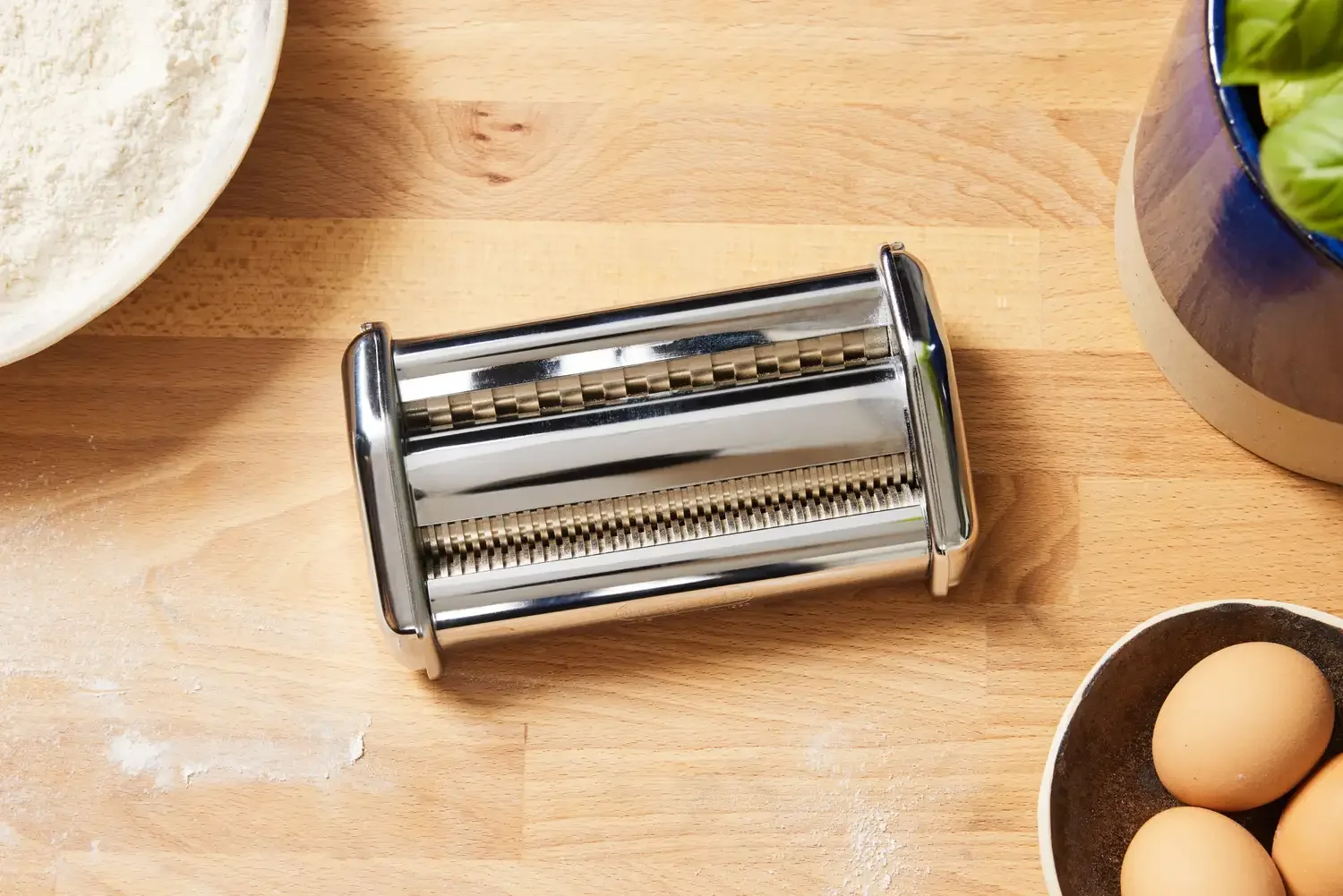
For most pasta, the dough is rolled progressively thinner through several settings. Lasagna sheets can remain comparatively thick, while stuffed pasta needs a thin, flexible sheet that is still strong enough to hold filling. Fettuccine and tagliolini are usually rolled thin enough to cook evenly, but the ideal thickness depends on the cutter and the recipe. If the sheet tears, looks ragged, or becomes transparent before you are ready, move back to a slightly wider setting.
How to Roll Dough Through the Machine
Feed the flattened dough into the rollers while turning the handle steadily. Support the emerging sheet with your free hand, but do not pull it downward or stretch it. After the first pass, fold the sheet into thirds or bring the sides toward the center, then flatten it and pass it through the widest setting again. This early folding step can help create a more uniform sheet.
Once the dough has a neat shape and consistent texture, stop folding and reduce the roller gap one setting at a time. Pass the sheet through once at each stage. If it becomes too long to manage, cut it in half and continue with shorter pieces. Keep the unused half covered while you work.
A well-rolled sheet should feel supple and even, with no thick center or paper-thin edges. If the dough sticks to the rollers, dust both sides lightly and wait a moment for the flour to absorb surface moisture. If it repeatedly crumbles, the dough may be too dry or insufficiently rested. If it stretches and clings, it may be too wet; dust it lightly, fold it, and continue only if the texture improves.
Turn the handle at a steady pace rather than forcing it. A machine should roll the dough smoothly. Resistance can indicate that the sheet is too thick for the current setting, the dough is too wide, or a piece has folded inside the rollers. Stop, back the dough out if possible, and correct the problem instead of applying extra force.
Cut Sheets into Fettuccine, Tagliolini, and Other Shapes
Before cutting, let the rolled sheet sit briefly until it is flexible but no longer wet on the surface. A very moist sheet can stick inside the cutter, while an overly dry sheet may crack. Cut long sheets into practical lengths if you prefer shorter noodles, then feed each piece through the fettuccine or tagliolini cutter with the same steady motion used for rolling.
Fettuccine produces broad ribbons that work well with substantial sauces, while tagliolini creates a finer strand that cooks quickly and suits lighter preparations. If your machine includes a different cutter or an attachment, check the spacing and recommended dough thickness before using it. Not every attachment is designed for every dough consistency, and forcing a thick sheet through a narrow cutter can cause clumping.
Recommended product
Use these catalog picks as a shortlist for how to use a pasta machine: rolling, cutting, and shaping dough. Compare measurements, materials, and return terms side by side instead of buying from a photo alone.
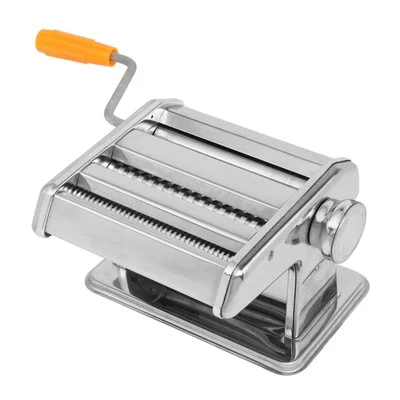

Separate the strands immediately with your fingers or a little flour. For filled pasta, place the sheet on a lightly floured surface, add measured portions of filling, cover with another sheet, and press out air before cutting. Excess flour around the seal can prevent the edges from sticking, so brush away loose flour before forming ravioli or other filled shapes.
Dry, Cook, and Store Machine-Made Pasta
Fresh noodles can be cooked immediately, but a short drying period makes them easier to handle. Arrange them in loose nests on a floured tray or hang them on a pasta rack, making sure strands do not touch too much. Drying time depends on thickness, humidity, and the dough recipe. The goal is to firm the surface, not necessarily to make the pasta completely brittle.
Bring a large pot of well-salted water to a full boil before adding fresh pasta. Fresh noodles generally cook much faster than dried pasta, so begin checking after one or two minutes. Taste a strand rather than relying only on a timer. Reserve a little cooking water before draining, especially when finishing the pasta with a sauce that benefits from starch.
For storage, refrigerate fresh pasta in a covered container for a short period and keep strands separated with flour or parchment. For longer storage, freeze portions in loose nests on a tray first, then transfer them to an airtight freezer container. Cook frozen pasta directly from frozen, adding time as needed rather than thawing it, which can make the strands stick together.
How to Compare Catalog Picks
When comparing catalog picks, weigh the machine’s roller width, adjustment range, cutter options, clamp stability, handle comfort, and replacement-part availability. A manual pasta machine is often straightforward and does not require a motor, but it needs counter space and both hands during use. A model with a wider roller may process sheets more efficiently, while a compact design can be easier to store. Consider whether the included cutter suits your preferred shapes and whether an attachment is available for future recipes. Brands such as Goldspatz Germany, Shule, and Marcato may appear among pasta machines, so compare the listed specifications and included accessories rather than assuming that a familiar name guarantees a particular feature.
Cleaning the Machine After Use
Clean the machine as soon as you finish, before dough dries in the rollers or cutters. Disconnect or remove the handle and any detachable cutter, then brush away flour and crumbs with a dry pastry brush or the cleaning brush supplied by the manufacturer. Turn the rollers slowly while brushing so you can reach the grooves safely.
Do not rinse or immerse the main machine unless the manufacturer specifically states that it is washable. Water can damage internal parts and encourage corrosion. Avoid knives, metal picks, and abrasive sponges, which can scratch rollers or disturb their alignment. For stubborn dried dough, allow it to harden fully and gently brush or tap it away rather than adding water.
Wipe the exterior with a barely damp cloth if needed, then dry it thoroughly before storage. Keep cutters and the handle in a dry place, and avoid wrapping the machine while any moisture remains. With rested dough, gradual roller adjustments, and careful cleaning, pasta machines can produce consistent sheets and noodles across many recipes without complicated equipment.
FAQ: How to Use a Pasta Machine: Rolling, Cutting, and Shaping Dough
How do you prepare pasta dough before using a pasta machine?+
Knead the dough until smooth, then wrap it and let it rest for about 30 minutes at room temperature. Divide it into smaller pieces and flatten each piece by hand before feeding it through the rollers. Keep unused dough covered so it does not dry out.
What setting should I use first on a pasta machine?+
Start with the widest roller setting and pass the dough through once or twice, folding it if needed to create an even sheet. Reduce the setting one notch at a time until the dough reaches the thickness required for your pasta shape. Thicker sheets suit filled pasta, while thinner sheets work well for tagliolini and delicate noodles.
How do you stop pasta dough from sticking to the machine?+
Dust the dough lightly with flour before rolling, but avoid adding so much that the dough becomes dry or difficult to seal. If it starts sticking to the rollers, let the sheet dry briefly and brush away excess flour before the next pass. Keep the machine on a stable, dry surface while working.
How do you cut pasta sheets with a pasta machine?+
Let the rolled sheet dry until it feels pliable but no longer sticky, then pass it through the cutter attachment for fettuccine or tagliolini. Catch the strands as they emerge and dust or loosely coil them to prevent clumping. For shapes such as lasagna sheets or filled pasta, cut the sheet by hand using the desired dimensions.
How do you clean and store a pasta machine after use?+
Let any dough residue dry, then brush it away with a dry cloth or the cleaning brush supplied with the machine. Do not submerge the machine or rinse its cutting rollers unless the manufacturer specifically allows it. Store it completely dry, with removable parts separated or secured according to the instructions.